
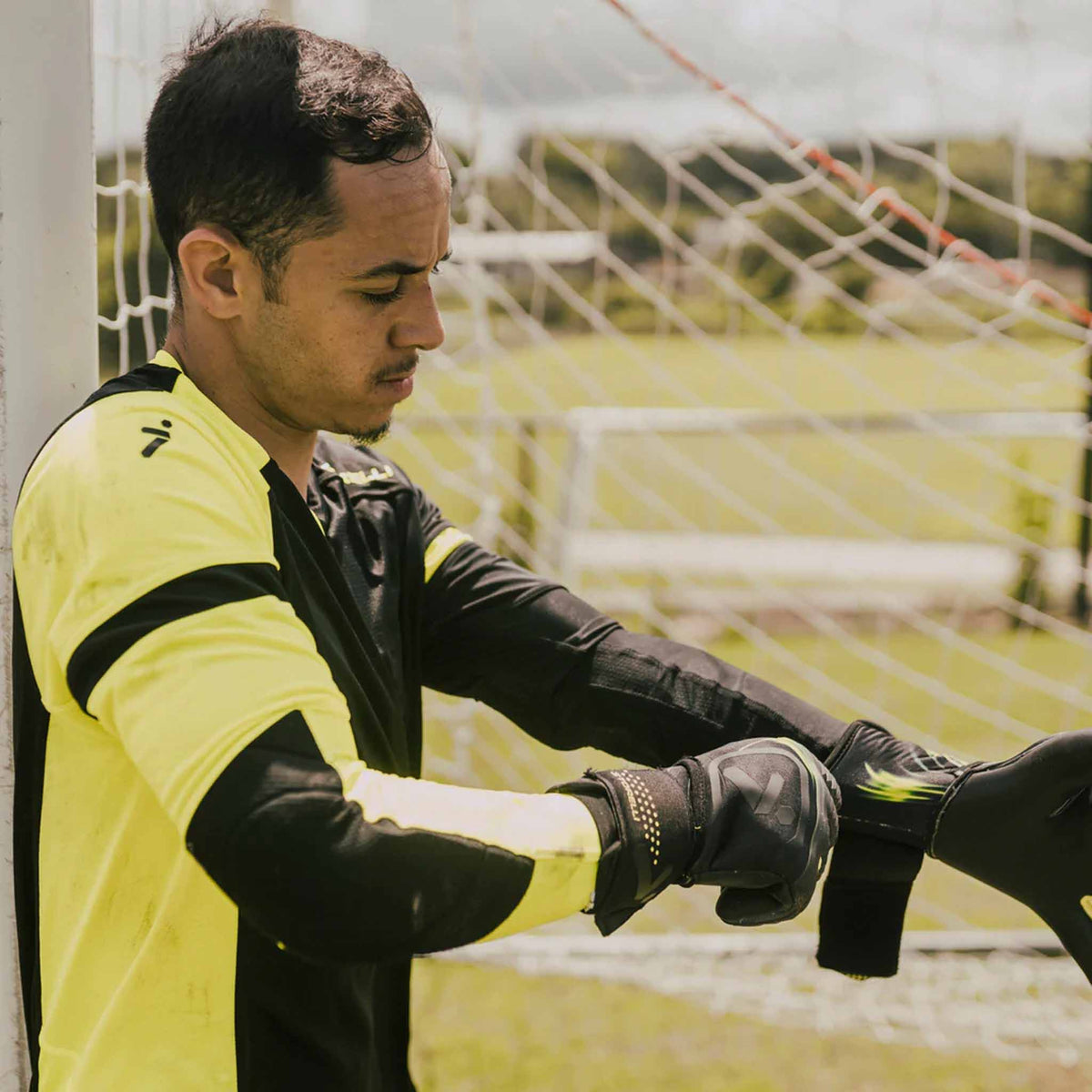
The goalkeeper is the only player allowed to use their hands — and it's also the position that needs the most specific gear. Whether you're a parent kitting out a child for the first time, a teen getting serious between the posts, or an adult starting in a rec league, this guide covers all the essential goalkeeper equipment in soccer, based on the experience of real fitters here in Canada.
The essentials, in order of priority: gloves (the key piece), protective base layers, the jersey and pants, then the right shoes for your surface. In Canada, where most fields are synthetic turf, protection and durability matter even more.
In this guide: Required gear · Gloves · Apparel · Protection · By level · Budget · FAQ
What goalkeeper equipment is mandatory?
By the rules, a goalkeeper mainly needs a jersey in a colour that distinguishes them from teammates, opponents and the referee, plus shin guards and shoes, like any player. The rest — gloves, pants, protective base layers — isn't mandatory under the rules, but quickly becomes essential in practice, especially on Canada's synthetic turf. Here's the essential goalkeeper equipment at a glance:
| Equipment | Mandatory | Recommended | Why |
|---|---|---|---|
| Gloves | ✓ | Ball control and hand protection | |
| Jersey | ✓ | Distinct colour (rules) + padded elbows | |
| Shin guards | ✓ | Mandatory for every player | |
| Shoes | ✓ | Suited to the playing surface | |
| BodyShield | ✓ | Reduces impact from falls | |
| Pants | ✓ | Protects on synthetic turf | |
| Knee pads | ✓ | Useful for intensive training |
In short: the strictly required equipment is minimal, but a complete goalkeeper kit (gloves, protection, pants) makes all the difference in comfort, safety and performance.
Goalkeeper gloves: the key piece
Gloves are the heart of a goalkeeper's gear: they protect your hands, improve your grip and are an extension of your movements. Choosing them well — and caring for them — makes all the difference.
Finding the right size
A goalkeeper glove size is based on hand width, not your shoe size. Measure your palm just below the knuckles, and when you're between two sizes, take the larger one. We break down the full method and chart in our goalkeeper glove size guide.
Glove cuts
Each cut suits a different profile: the regular cut (flat cut) leaves more room in the fingers, ideal for beginners; the roll finger wraps the latex around the finger for maximum grip; the negative cut offers a very precise, technical fit; and the hybrid blends styles. To start, go with a roll finger or regular cut — more versatile and more forgiving. We dig deeper into model choice in our guide to choosing goalkeeper gloves.
The brands we recommend
After fitting hundreds of keepers, our go-to picks for value are Reusch (a European reference for quality, durable latex), RG Goalkeeper Gloves (a specialist brand with excellent latex at a fair price) and Storelli (focused on protection and durability, great for turf).
Most indoor and outdoor fields here are synthetic turf, far more abrasive than natural grass. Gloves that would last 6 months on grass can wear out in 2 to 3 months on turf. Favour a denser, more durable latex, consider a second pair (match vs training), and care for them rigorously.
Shop your goalkeeper gloves
Reusch, RG, uhlsport and more — every size, from junior to adult.
See all goalkeeper glovesThe goalkeeper jersey and pants
The goalkeeper jersey
The keeper has to stand out from teammates, but the goalkeeper jersey goes further: it has padding at the elbows and hips to cushion dives. To start, look for elbow padding, a breathable but tough fabric and a fitted cut that isn't restrictive. Browse our goalkeeper jerseys and shorts.
The goalkeeper pants
On synthetic turf — most surfaces in Canada — long goalkeeper pants are practically essential. They protect the knees and thighs during slides, with targeted padding and an abrasion-resistant fabric. For a young beginner, knee pads under shorts can do the job in the meantime.
Protective base layers for goalkeepers
If we had to name the most underrated piece for a beginner keeper — the essential everyone forgets — it would be Storelli BodyShield protective base layers. These compression shorts and leggings have rigid protection built right into the garment at the hips, knees and thighs: full protection, invisible under the jersey and pants, with no added bulk or restriction.
Why does it matter so much here? On turf, falls and slides hurt far more than on natural grass, and the BodyShield absorbs the impact at the source. It's a complete, one-piece solution — ideal for a beginner who isn't sure yet what to buy — and we recommend it to nearly every keeper.
Knee pads for goalkeepers
While the BodyShield already covers the hips and thighs, dedicated knee pads target the keeper's most frequent point of impact: the knee. They're especially useful in three cases — young keepers learning to dive who repeat the motion hundreds of times, indoor soccer on very hard surfaces (gym floors, covered concrete), and players who want maximum protection on abrasive turf.
When choosing, look for a pair that stays put during play: a knee pad that slides protects nothing. Favour padding that covers the kneecap and the side of the knee (where you land when diving), a snug hold that doesn't cut off circulation, and a low profile that slips under goalkeeper pants without restricting your bend. For younger players, measure around the knee and replace once the elastic loosens. Find our models in the goalkeeper accessories.
Soccer shoes for goalkeepers
Good news: a goalkeeper doesn't need different shoes from outfield players, with a few nuances. On natural grass, classic moulded cleats (FG); on synthetic grass, artificial grass & turf (AG/TT) shoes with short studs; indoors, indoor shoes (IT) with a non-marking sole. Since keepers make a lot of lateral movements, aim for good lateral stability.
How to choose your goalkeeper gear by level
The ideal goalkeeper gear varies with age and intensity of play. Here are our benchmarks so you neither under-equip nor overspend.
Child (introduction)
Aim for gloves in the right size and an entry-level goalkeeper jersey, plus light protection (junior BodyShield or knee pads). No need for high-end gear: hands grow fast and play stays low-intensity. Simple, well-fitted goalkeeper equipment is enough.
Teen
Teens start diving for real: add the goalkeeper pants and BodyShield, and step up to mid-range gloves with better latex. Re-measure the hand at the start of each season.
Recreational adult
Focus on comfort and durability: a good all-round pair of gloves, the BodyShield to cushion falls and a complete goalkeeper kit. On turf, pants quickly become essential.
Competitive
Plan for two pairs of gloves (one for matches, one for training) with high-end latex, a cut chosen to your preference, and a full quality kit. Rigorous glove care becomes a habit here.
Budget guide by age and level
| Profile | Approx. budget | Priorities |
|---|---|---|
| Beginner kid (6-10) | $75 – $150 | Gloves + goalkeeper jersey |
| Beginner / intermediate teen | $150 – $300 | Gloves + jersey + pants |
| Recreational adult | $200 – $350 | Full kit (gloves, jersey, pants) |
| Serious / competitive | $350 + | 2 pairs of gloves + full quality kit |
All your goalkeeper equipment
Gloves, apparel, protection and accessories — for keepers of all ages.
Shop goalkeeper gearWhere to start?
If you're starting out as a goalkeeper, here's the priority order our team recommends:
- Gloves — THE keeper piece. Invest here first, and do the first wash before using them.
- Storelli BodyShield base layers — the foundation of your protection, invisible and complete.
- The goalkeeper jersey — elbow protection and on-field identification.
- The goalkeeper pants — essential on turf.
- The right shoes — based on your playing surface.
Frequently Asked Questions
What is the essential equipment for a beginner goalkeeper?
In order: goalkeeper gloves, protective base layers (like Storelli BodyShield), a goalkeeper jersey padded at the elbows, long pants (especially on turf) and shoes suited to the surface. Gloves and protection are the two priorities.
How do you care for goalkeeper gloves?
Wash them before the first use with a specialized cleaner, rinse with lukewarm water after each match while the latex is damp, never use soap or a washing machine, and air-dry in the shade. Good care extends their life by 30 to 50 %.
Do you need long goalkeeper pants?
On synthetic turf — most fields in Canada — yes: they protect the knees and thighs during slides. On natural grass, knee pads under shorts can be enough to start.
What is the Storelli BodyShield?
It's compression shorts and leggings with rigid protection built into the hips, knees and thighs. Invisible under the uniform, they absorb the impact of falls — especially useful on abrasive synthetic surfaces.
How do you equip a child starting as a goalkeeper?
Start with gloves in the right size and an entry-level goalkeeper jersey, then add protection (junior BodyShield or knee pads). Budget about $75 to $150 for a young beginner, and re-measure the hand at the start of each season.
In short
Essential goalkeeper equipment comes down to five pieces: gloves, protection (BodyShield), jersey, pants and shoes. Start with the gloves, don't skip the protection, and adapt everything to your surface — especially turf, which is everywhere in Canada. When in doubt, come see us: our team takes the time to give you the right advice.